

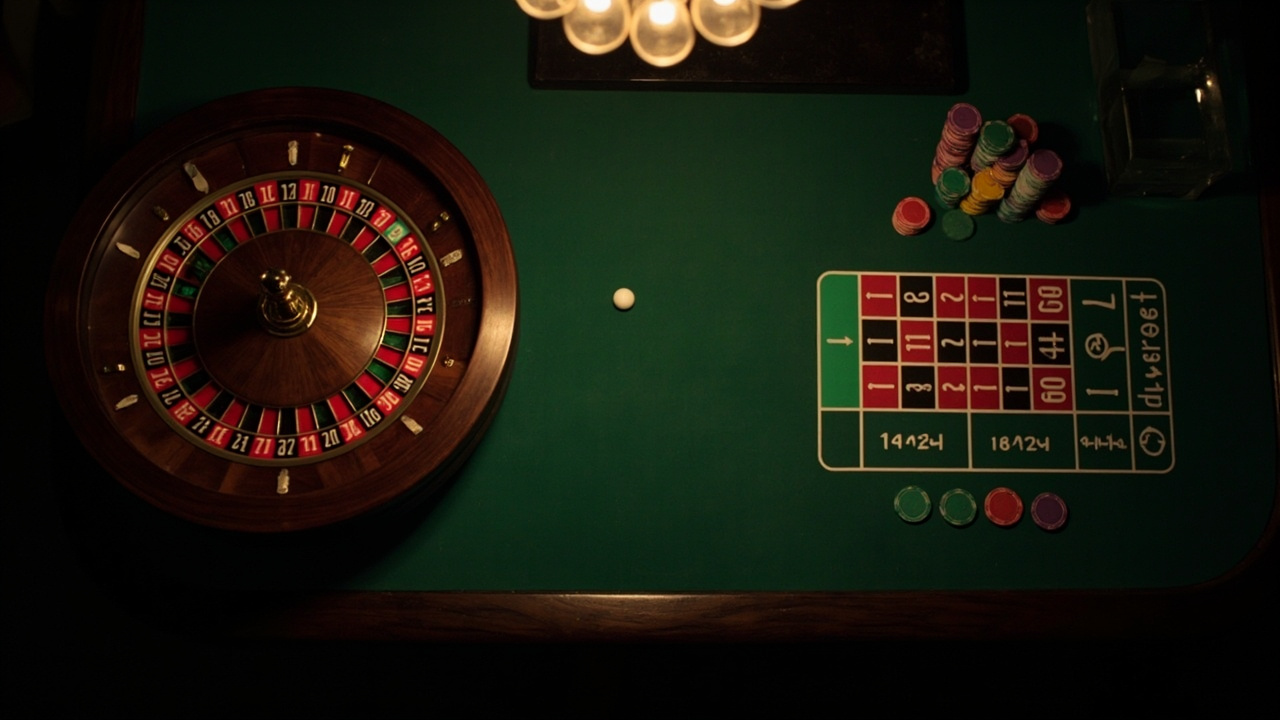
You step into a Melbourne laneway on a warm arvo, watching the spin of a wheel through a café window, and the maths behind that slow, deliberate game feels oddly close to the screen in front of you. French roulette carries that same deliberate pace, and the la partage rule is the quiet mechanic that changes how a losing even-money bet behaves when the ball settles on zero, giving half your stake back rather than handing the house the full amount. That half-return changes the feel of a session more than most players expect, and it is worth understanding before you place a chip.
[own; anchor=”jackpotjill-login.net”]
For players who want to test that mechanic without rushing through a signup, jackpotjill-login.net gives you a clear path to register, verify your details, and reach the first session with the rule visible on the table before you commit any funds. The site keeps the registration steps in one place, which helps you confirm eligibility and move through verification without losing track of where you are in the flow.
Once your account is active, you can explore the same features through a [lucky dreams bonus] provided via https://ddaymilitaria.com/free-bonus-coupon-lucky-dreams-casino. The welcome offer applies automatically to your balance, so you can practice the table rules with extra playing time. This setup lets you gauge the pace and payout structure before deciding how to manage your own bankroll.
How the la partage rule changes the maths
The la partage rule applies only to even-money outside bets such as red or black, odd or even, and low or high. When the ball lands on zero, instead of losing the full stake, you receive half back and the other half is taken by the house. That simple split lowers the house edge on those bets from the standard European figure toward a smaller number, which is why the rule matters more than the table layout itself. From a design standpoint, the clearest presentation shows the rule in the bet panel rather than burying it in a footer, because players read the table first and the terms second. The same principle applies to how a title sequence frames a slot: if the risk is real, the information should sit where the eye already travels, not where it has to hunt for it. On a French roulette table that respects the rule, you should see the half-return condition stated near the zero pocket or in the betting grid, not hidden behind a tap.
What the numbers look like in practice
Even-money bet | Standard European result on zero | La partage result on zero | Effective house edge on covered bets
Red or black | Lose full stake | Half stake returned | About 1.35%
Odd or even | Lose full stake | Half stake returned | About 1.35%
Low or high | Lose full stake | Half stake returned | About 1.35%
Inside bets | Lose full stake | No special return | Standard edge applies jackpotjill-login.net
That table is not a promise of profit; it is a way to see how the rule shifts the cost of a zero result on the bets it actually covers. The inside bets do not get the half-return, so the edge on a straight-up number stays at the usual level, and the rule should never be read as a blanket protection across the whole table.
Registration, verification and first session
A clean first session starts with a signup that asks only for what it needs, then moves through identity checks before you try to deposit. The practical order is straightforward: create an account, confirm your age and location, upload the documents the platform requests, and wait for verification to clear before you fund the account. Once that is done, the first deposit should be matched to a clear bonus activation step, because a bonus that fires automatically can confuse what is bonus money and what is your own stake. For French roulette with la partage, the first play should be a small even-money bet so you can see the half-return in action without turning the session into a test of luck. Payments and currencies should be stated in plain terms before you deposit, with the currency you will actually play in listed alongside any minimum or maximum limits, so you are not guessing at conversion rates mid-session. Mobile play should present the same rule and the same bet panel as the desktop version, because shrinking the table should not shrink the information that governs your stake.
A short checklist for the first session
- Confirm the table shows la partage on even-money bets before you place chips.
- Complete verification before depositing, so your first withdrawal path is already open.
- Read the bonus terms to see whether the bonus applies to roulette and whether la partage bets count toward any playthrough.
- Check the currency and limits listed for your payment method, not just the headline bonus amount.
- Start with a small even-money bet to observe the half-return on zero without overcommitting.
Expert view on the rule and the presentation
Lucas Brown, Lead Gaming Analyst, Tasman Gaming Partners, has noted that the la partage rule is one of the few roulette mechanics that genuinely changes the cost of a zero result on the bets it covers, and he cautions that players should still treat it as a reduction in house edge, not a shield against variance. His point is that the rule matters most when the table presents it clearly and the player understands which bets it applies to, because a half-return on even-money bets is useful only when you know it is there and you know what it does not cover. That is the same judgement call I make when reviewing a title screen: a mechanic is only as good as the clarity around it, and a half-return that is easy to miss is a half-return that does not help anyone.
Where the rule fits for an Australian player
For an Australian adult looking at French roulette with la partage, the rule is most useful when you are playing even-money bets and you want the zero result to cost less than the usual full loss, while still accepting that the house keeps an edge and outcomes stay random. The fit is stronger on tables that state the rule plainly, on accounts that have already cleared verification, and on sessions where the bonus terms do not quietly exclude the bets you actually want to make. If a platform presents the rule only in dense terms and conditions, or if the first deposit bonus pushes you toward bets the rule does not cover, the half-return becomes harder to use in practice. The rule is not a reason to chase losses, and it is not a reason to assume a session will end favourably; it is a condition that changes the price of one specific outcome on one specific set of bets.
That is the partage rule in plain terms: a half-return on even-money bets when zero hits, a smaller house edge on those bets, and a presentation that should make the condition visible before you stake rather than after. If you want to read a related piece on French roulette and no-deposit offers at Lucky Dreams, you can find that in the French roulette and Lucky Dreams no-deposit offers article, which sits beside this one and covers a different angle on the same table style.
